
TMJ Treatment in Frisco, Texas
A careful look at jaw pain, clicking and bite changes, so your care is matched to what's behind your symptoms.

When Your Jaw Asks for Attention
TMJ treatment in Frisco starts with understanding your symptoms. A sore jaw, a click or a bite that suddenly feels different can come from several places, and the right care depends on which one is behind yours.
What you may notice first
Pain or tenderness around the jaw joint, temples, face or neck, a jaw that clicks, pops, catches or won't open fully, tired chewing muscles, or teeth that no longer seem to meet the way they used to.
An assessment before any recommendation
The doctor looks at the whole pattern first, so a night guard, an appliance or any other option comes up only when the findings point to it.
Coming from Plano
Our Plano office closed on April 1, 2026. Patients from Plano, including those who used to visit that office, now come to our Frisco office on Parkwood Boulevard for TMJ care.
About Our Office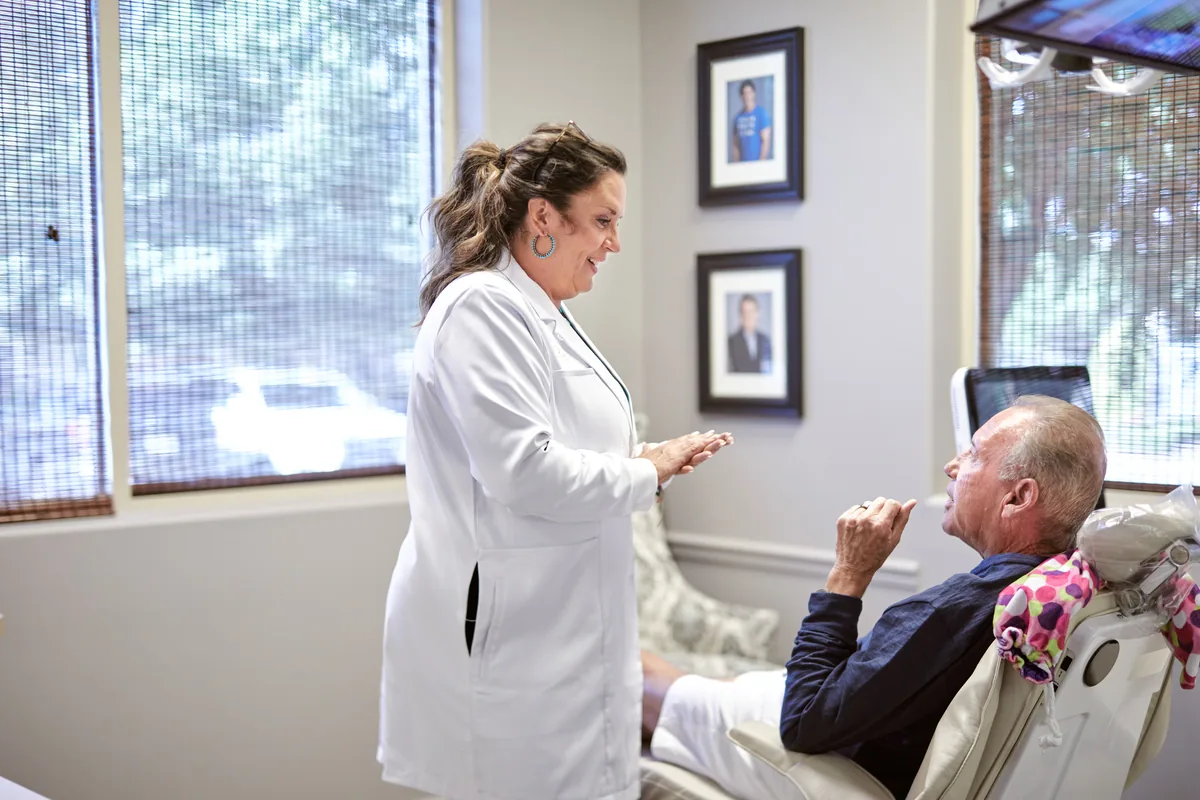
TMJ and TMD, Explained
The joint
Your temporomandibular joints sit just in front of your ears and connect your lower jaw to your skull, working with your muscles, ligaments and teeth every time you talk, chew, laugh or yawn.
The disorder
TMD, short for temporomandibular disorder, is the name for problems in those joints or the muscles that move them. Many people say "TMJ" for both, and you'll hear us use either one.
Why symptoms differ
Clenching, grinding, muscle strain, an old injury, changes inside the joint, stress and sleep habits can each play a part, often more than one at a time. That's why two people with the same sore jaw may need very different care.
What Happens at Your TMJ Evaluation in Frisco
We take our time with your TMJ evaluation in Frisco. The doctor explains each step as it happens and what it shows.
Your story and health history
When the symptoms started, what makes them better or worse, past injuries, headaches, sleep, clenching and any care you've already tried all help the doctor see the pattern.
Your jaw joints and muscles
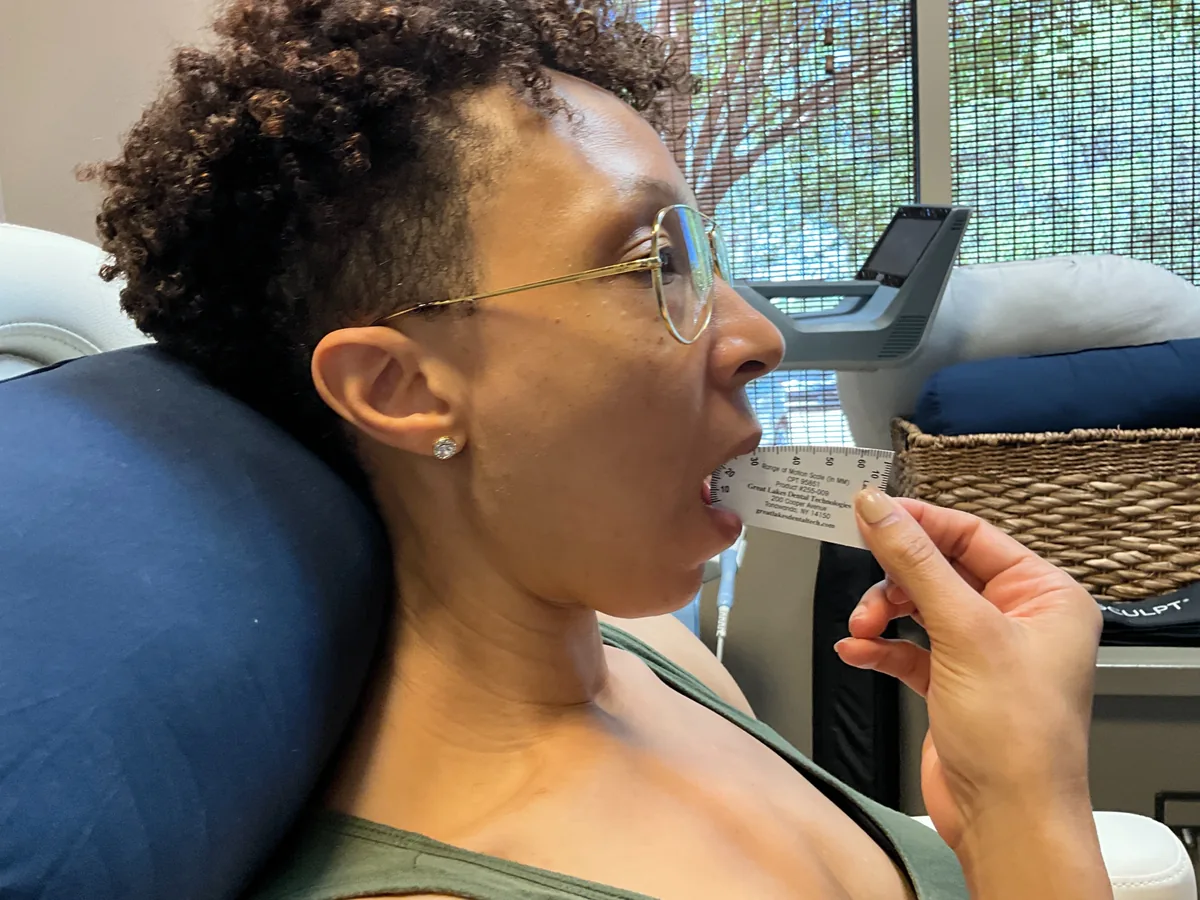
The doctor checks for tenderness, listens for joint sounds, watches how your jaw tracks and measures how far you can comfortably open.
Your bite and teeth
Worn or cracked teeth, sensitive spots and the way your upper and lower teeth meet can show where extra force is going.
3D imaging when it helps
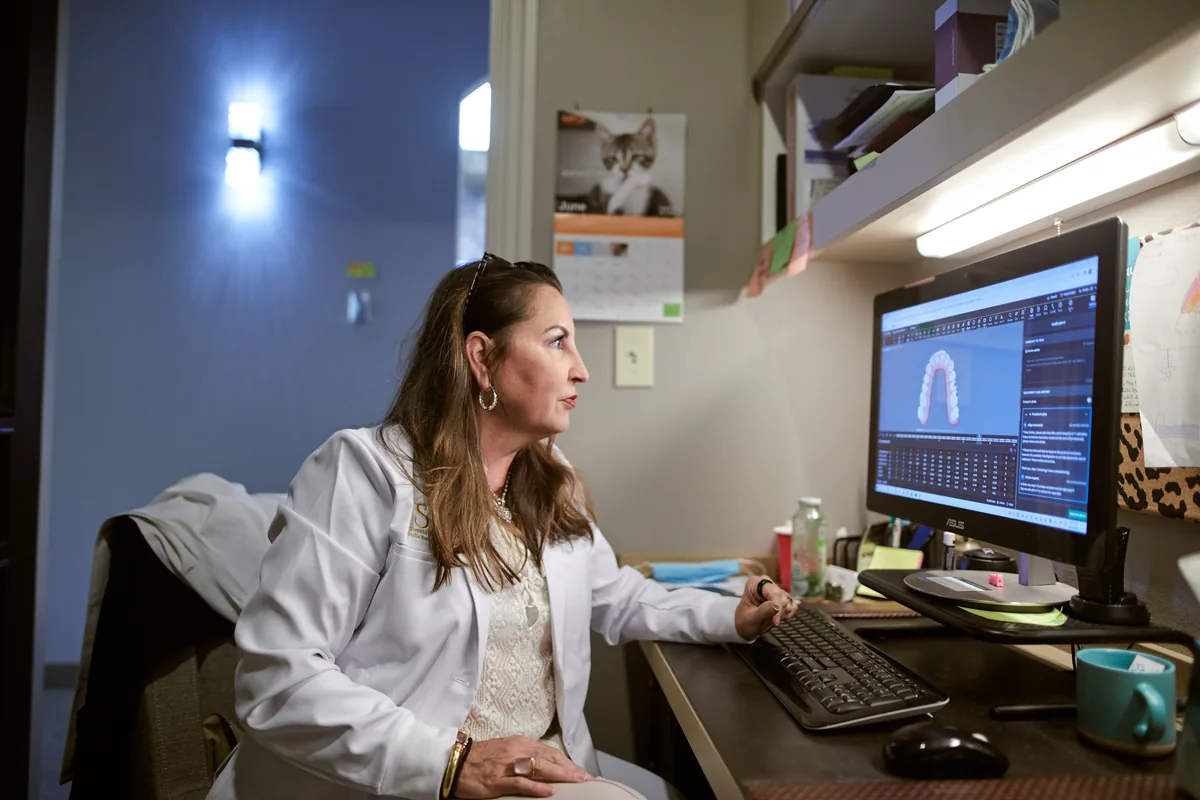
Our in-office CBCT 3D imaging shows the joints, bone and airway in detail. The doctor uses it when it adds something the exam alone can't show.
Your Options for TMJ Treatment in Frisco
There's no single treatment that suits every jaw, so the doctor recommends options in order, starting with the most conservative ones that fit your findings.
Custom night guards and oral appliances
A guard made to fit your own teeth can protect them from grinding and ease the load on tired muscles and joints. It can help, especially if you clench at night, but it isn't a cure for every jaw problem. The doctor checks how you respond and adjusts it over time.
Muscle-relaxing appliances
A small appliance worn for short periods can help overworked chewing muscles relax. That lets the doctor see where your jaw sits comfortably before planning any other step.
Home care and habit changes
Softer foods for a while, resting your teeth slightly apart during the day and noticing when you clench can calm an irritated joint while treatment gets underway.
Bite and alignment planning
When the way your teeth meet is part of the problem, the doctor may discuss restoring worn teeth. When it's clinically appropriate, Invisalign clear aligners may also be an option.
Invisalign Clear AlignersMuscle and tension support
As part of TMJ care, the doctor may suggest non-invasive technologies we use in our office. EMFACE® may be used to help ease muscle tension around the jaw joint. EMSCULPT NEO®, a muscle treatment, is used to help release tension in the neck and shoulders. EMVITAL, our red light therapy, is used to help the neck and shoulders relax. EXOMIND is designed to help you relax and manage stress. These are also part of our EMSMILE® program.
About EMSMILE®Regenerative options
For some joint concerns, the doctor may discuss regenerative therapies, such as PRP (platelet-rich plasma). Before you decide, the doctor walks you through who they may suit, what the evidence shows, the alternatives and the limits.
Regenerative DentistryWhen We Refer You
Jaw symptoms sometimes have causes outside the mouth. When your findings point there, the doctor tells you plainly and helps you find the right next appointment.
Your physician
For headaches, ear symptoms, joint conditions such as arthritis, or anything that suggests a wider health question.
A physical therapist
For neck, posture and jaw muscle problems that respond to guided exercise and hands-on therapy.
A sleep clinician
When clenching or jaw pain comes with loud snoring, pauses in breathing at night or waking up unrested.
An oral surgeon
When imaging shows a structural change in the joint that may need a surgeon's opinion.
What to Expect From TMJ Care
Every jaw responds differently
How long care takes depends on your findings, how long you've had symptoms and how your jaw responds. Some plans are short, with a night guard and a few habit changes. Others take a longer, step-by-step approach. The National Institute of Dental and Craniofacial Research's overview of TMD is a good, plain read on why conservative care comes first.
Findings, limits and costs come first
Before any TMJ treatment in Frisco begins, the doctor goes over what the evaluation found, the options that fit, what each can and can't do and what it costs, so you decide with the full picture.
Care focused on your jaw
Your plan stays about comfort and function, and other dental treatment comes up only when it's relevant to your jaw concern.
Insurance and payment
We're out of network with all dental insurance plans, and DHMO plans aren't accepted. If you have a PPO plan, we'll help you file your claims. Some TMJ care may fall under medical insurance, so bring both cards. Financing options are available. Talk with our team, and we'll go over them with you.
While You Wait for Your Evaluation
Self-care can't diagnose or correct what's behind your symptoms, but these steps can take some strain off your jaw in the meantime.
Give your jaw a lighter workload
Choose softer foods and smaller bites for a few days, skip gum and very chewy foods, avoid wide yawns where you can, and let your teeth rest slightly apart during the day. Rest your chin off your hand and avoid sleeping with pressure on your jaw. Use warmth or a cold pack only as advised, protecting your skin.
When to schedule an evaluation
Call us if your jaw hurts for more than a week or two, if it catches, locks or won't open as far as it used to, if your bite suddenly feels different, or if a click has started to come with pain. A painless click on its own often needs no treatment. It's still worth mentioning at your next visit.
Call (972) 377-7800 Book OnlineWhen to get medical care right away
Go to urgent care or call 911 after a serious injury to your face or jaw, if your jaw is stuck open or closed or looks dislocated, or if jaw pain comes with major swelling, fever, trouble breathing or swallowing, chest pain, or weakness or numbness anywhere in your body.
Questions About TMJ Treatment
These are general answers, and your evaluation is where they become specific to you.
The best treatment is the one that matches what's causing your symptoms. That's why TMJ treatment in Frisco starts with an evaluation here. Care usually starts with conservative steps, such as a night guard and home care, and moves to other options only if you need them.
No. A click without pain or limited movement often needs nothing at all, while a click that's new, painful or comes with locking deserves a look.
Not always. A night guard can help, especially if you clench or grind at night. The doctor checks how your jaw responds and adjusts the guard or the plan if it doesn't help enough.
It can. Both also have many other causes, so the doctor looks at your jaw as one part of the picture. If something else may be involved, we'll refer you to your physician. Cleveland Clinic's guide to TMD explains how these symptoms overlap.
It varies with your findings and how your jaw responds, and the doctor explains realistic milestones once the evaluation is done.
No. Call us directly, and our team will ask a few questions and book the right first visit.
Not quite. Grinding is a habit that can strain the jaw and wear the teeth, while TMD describes problems in the joint or its muscles. The two often show up together. The American Dental Association's patient page on TMJ explains the difference well.
Talk With Us About Your Jaw
If your jaw has been sore, stiff or noisy, we'd be glad to hear what's going on and help you decide on the right first step toward TMJ treatment in Frisco.
Call our team
Call us Monday through Thursday, 7:00 AM to 3:30 PM, and we'll ask a few questions and find a time for your evaluation.
Request a visit online
Choose a time online, mention your jaw symptoms in the notes, and our front office will confirm the visit with you.