
Dental implants · Frisco, Texas
Restore the root.Rebuild the smile.Return to confidence.
Dental implants replace missing teeth from the foundation up, supporting crowns, bridges, or full-arch restorations with stability designed for everyday life.
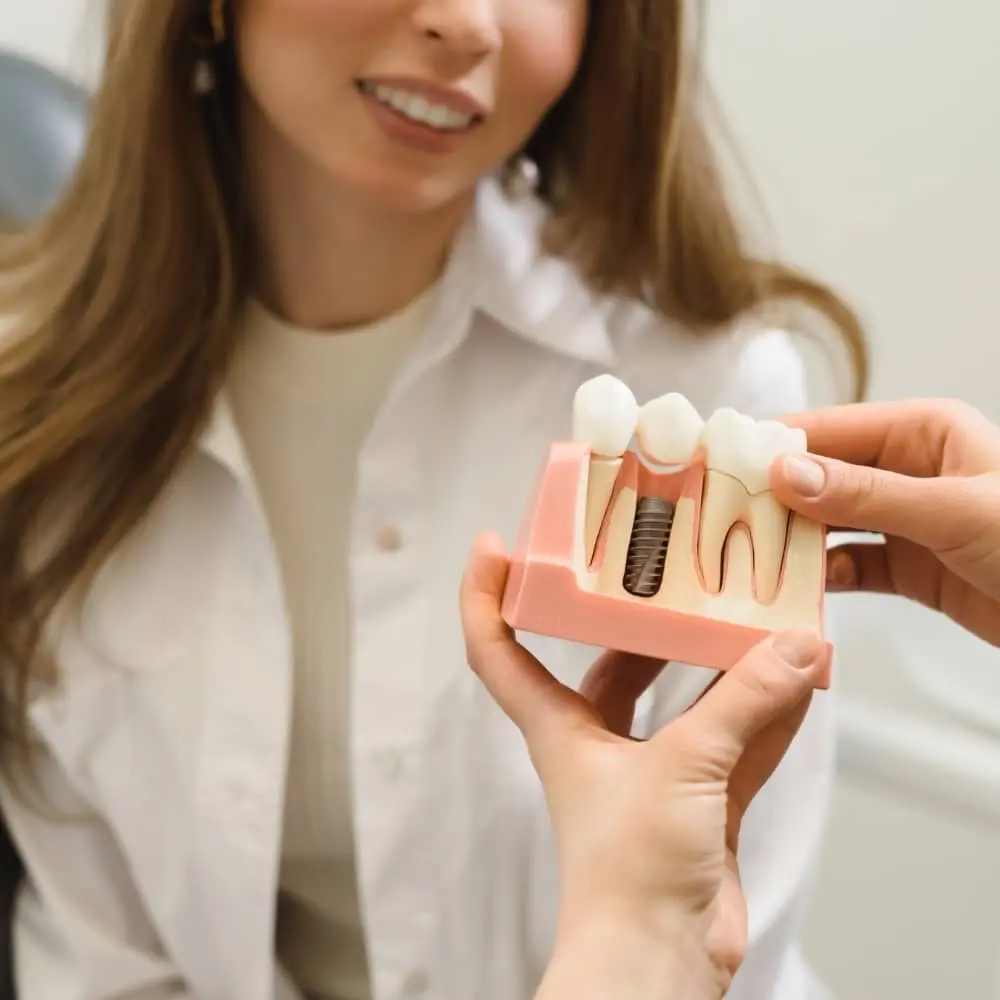
The gold standard of tooth replacement
Missing teeth affect more than the way a smile looks.
Tooth loss can influence chewing, alignment, gum health, confidence, and the jawbone beneath the smile.
Without stimulation from a tooth root, bone in the area can gradually change. Nearby teeth may drift, affecting the bite and daily cleaning.
Implant treatment recreates a root-like foundation and supports a custom restoration above it. Candidacy, timing, and outcomes depend on individual health and anatomy.
Why Stonebriar
Complex care made more connected.
Placed and restored in-house
Planning, surgical placement, and restoration can be coordinated by one familiar team when clinically appropriate.
3D treatment planning
Cone beam imaging helps evaluate bone, anatomy, and potential implant position in three dimensions.
Comfort-focused guidance
The team explains anesthesia, healing, temporary teeth, maintenance, costs, and alternatives before treatment.

What are dental implants?
Three parts create one complete replacement.
- Implant
- A biocompatible post positioned in the jaw to replace the missing root.
- Abutment
- A connector joining the implant to the restoration.
- Restoration
- A crown, bridge, removable overdenture, or fixed full-arch prosthesis.
A single implant can stand independently without reshaping adjacent teeth. Implant-supported dentures may offer greater stability than conventional dentures.
Why choose implants?
Benefits that extend from morning to mealtime.
Natural function
A stable restoration can support comfortable biting, speaking, and smiling.
Independent support
Implants do not rely on neighboring teeth in the way a conventional bridge does.
Bone stimulation
An integrated implant transfers functional forces to the jaw and may help preserve local bone.
Daily confidence
Fixed restorations are designed to remain stable during normal speaking and eating.
Familiar maintenance
Care includes brushing, interdental cleaning, and professional monitoring.
Long-term potential
With healthy tissues and maintenance, implants can serve for many years; longevity varies.
The four-step process
Planned in phases. Guided from start to finish.
Implant treatment often spans months because bone and tissues need time to heal. Immediate protocols are reserved for selected cases.
-
Consultation & planning
Review oral and general health, goals, imaging, bone, anatomy, and preliminary treatment needs.
-
Implant placement
Position the implant in the planned site using anesthesia and, when appropriate, sedation.
-
Osseointegration & abutment
Allow bone to stabilize around the implant, then connect the abutment for restoration support.
-
Final restoration
Fit, refine, and secure the custom crown, bridge, or denture.
Surgery, anesthesia, and healing
Know what to expect before treatment begins.
Many implant and bone-grafting procedures can be performed with local anesthesia. Sedation depends on medical history, procedure complexity, anxiety, and clinical judgment.
The reference describes integration periods of several months and many complete cases taking roughly six to eight months. Actual timing may be shorter or longer.
Initial phase
Placement, post-operative care, a protected site, and a temporary restoration when indicated.
Integration
Bone and implant stabilize while the team monitors healing and develops the restoration.
Restorative phase
Abutments, scans or impressions, try-ins, bite refinement, and final delivery.
Fixed or removable
Choose what fits your health and lifestyle.
Removable overdenture
Attaches to implants and can be removed by the patient for cleaning.
- Easier hygiene access
- Improved retention over a conventional denture
- May require periodic attachment maintenance
Fixed prosthesis
Secured to implants and removed only by a dental professional when needed.
- Stable, natural-feeling design
- No routine removal by the patient
- Detailed cleaning beneath the prosthesis is essential
Advanced implant technology
More information supports more precise decisions.
3D imaging
Shows bone volume and nearby anatomy for virtual planning.
Guided surgery
Transfers digital planning through a surgical guide when appropriate.
Immediate placement
An implant may sometimes be placed at the extraction visit.
Immediate loading
A temporary restoration may be connected early when stability permits.
Single-stage implants
Certain designs may avoid a separate uncovering procedure.
Titanium or zirconia
Material selection reflects clinical, restorative, and patient considerations.
Advanced preparatory procedures
Build a stronger foundation when bone is limited.
Bone grafting
Grafting material may support formation of a more suitable implant foundation. Healing commonly takes months.
Sinus lift
For selected upper posterior sites, the sinus membrane may be elevated and graft material added beneath it.
Understanding cost
A complete estimate begins with a complete plan.
Cost varies because implant treatment is customized and completed in phases. An estimate follows examination and imaging.
Number of implants
Single-tooth, bridge, overdenture, and full-arch cases require different support.
Restoration & materials
Crowns, bridges, dentures, titanium, zirconia, and laboratory design influence cost.
Preliminary treatment
Extractions, periodontal therapy, grafting, or sinus lift add clinical phases.
Financing
Eligible patients may explore third-party financing such as CareCredit.
Long-term maintenance
Professional care and possible future component replacement should be considered.
Dental implant aftercare
Long-term success depends on daily partnership.
Prioritize hygiene
Brush and clean between implants and beneath prostheses using the tools recommended for your design.
Protect restorations
Use a sports guard or nightguard when indicated and never use teeth as tools.
Avoid tobacco
Smoking and tobacco can impair healing and increase biological complications.
Keep recall visits
Professional care monitors tissues, bone, bite, components, and home hygiene.
A brief history
From early experiments to modern osseointegration.
People attempted to replace teeth with materials such as shells and wood thousands of years ago. Modern implant dentistry changed after Swedish researcher Per-Ingvar Brånemark observed that titanium could form a stable connection with living bone—a process called osseointegration.
Digital imaging, restorative materials, surface technology, and guided planning continue to refine treatment.
Dental implant FAQ
Clear answers before a significant decision.
Is dental implant surgery painful?
Local anesthesia numbs the area, and sedation may suit some patients. Soreness, swelling, and bruising can occur afterward; instructions are individualized.
Will dental implants look natural?
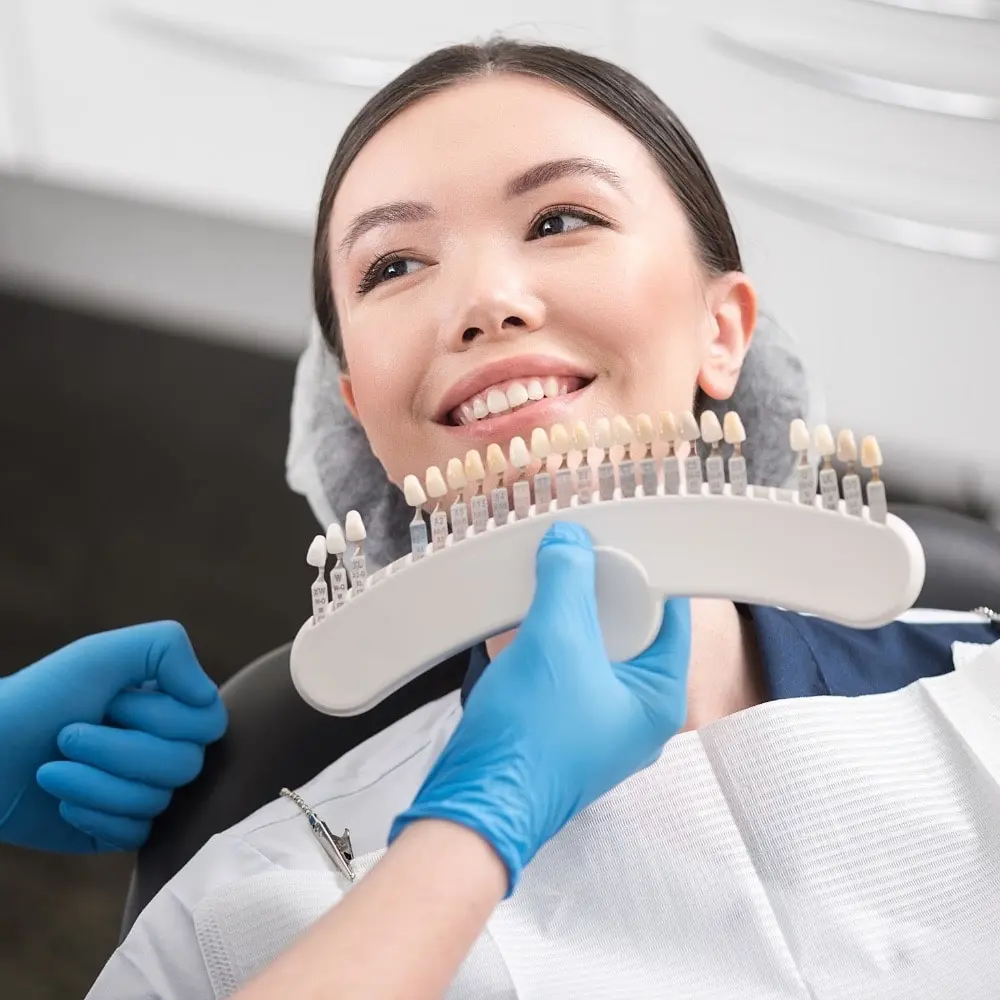
The visible restoration is shaped and shaded to complement the smile. Appearance depends on tissue conditions and restorative design.
How should I clean dental implants?
Brush and clean between teeth daily. Floss threaders, interdental brushes, or a water flosser may be recommended.
Will implants restore chewing function?
Implant restorations are designed to improve stability and function. The amount restored varies with anatomy, implant number, restoration, and healing.
What should I eat after surgery?
Follow your post-operative instructions. Soft foods are common early, while hard, crunchy, hot, or irritating foods may be restricted.
How long does treatment take?
Many cases take several months, often around six to eight months on the reference page. Grafting or complex healing may extend timing.
What prostheses are available?
Options include a single crown, implant bridge, removable overdenture, and fixed full-arch prosthesis.
How many implants support a full arch?
The number varies by anatomy and design. Approximately four to eight may be considered, but only 3D evaluation determines the plan.

Rebuild with clarity
Discover what is possible for your complete smile.
Meet with our Frisco team for imaging, a candidacy evaluation, and a step-by-step plan.