Sedation dentistry · Frisco, Texas
Feel safe.Feel understood.Comfort shaped around you.
Personalized sedation options can help ease dental anxiety, reduce sensory discomfort, and make necessary care feel more manageable.
Anxiety-free dentistry
Dental fear is real. Your care can still move forward.
Comfort begins with listening, not with judgment.
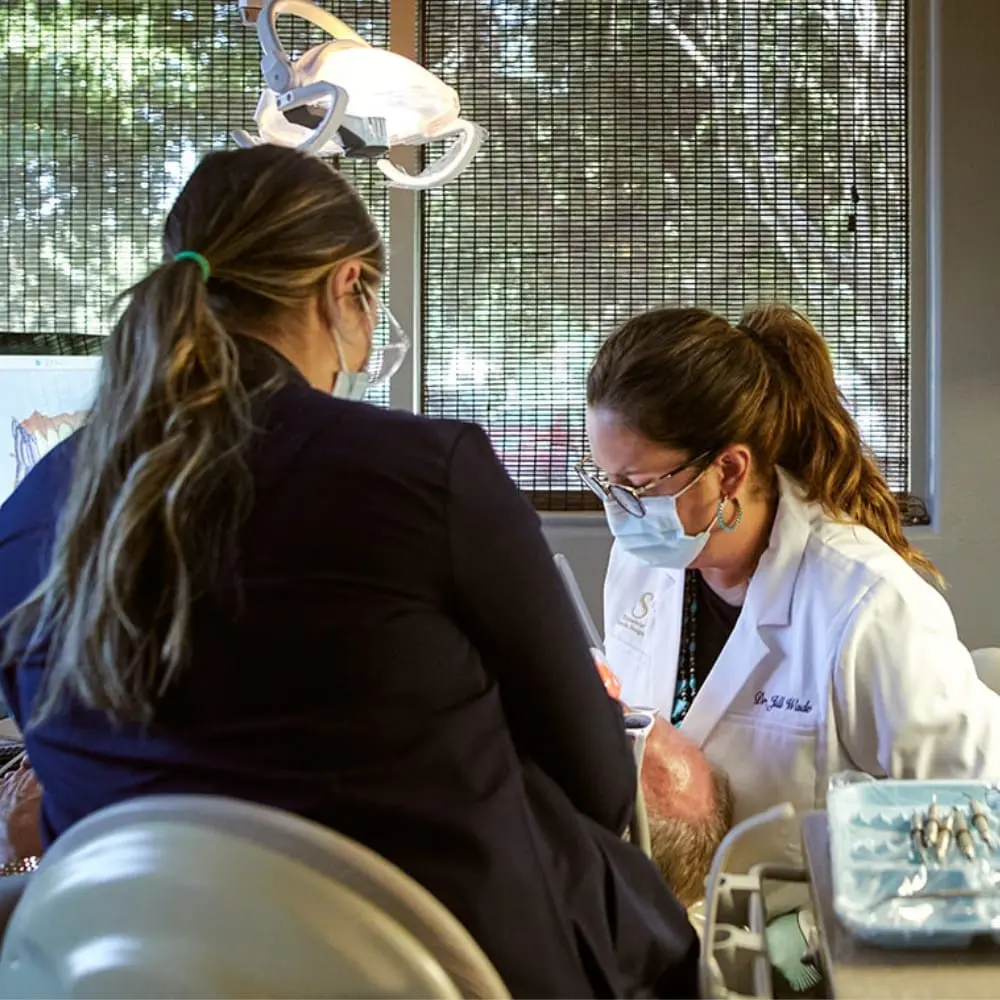
Fear of dentistry can keep people away until a small, preventable concern becomes a painful or complex problem. Stonebriar Smile Design offers several levels of sedation to help nervous patients feel calm and supported in the treatment chair.
Sedation is personalized according to anxiety, health history, medications, procedure length, and treatment needs. Local anesthesia is still used when necessary to numb the treatment area; sedation primarily supports relaxation and comfort.
Why Stonebriar
Multiple levels of support, one attentive team.
Fast-acting nitrous oxide
A light, inhaled option that begins working quickly and generally clears soon after the mask is removed.
Oral & IV sedation
Deeper relaxation options are available for appropriate patients who need more support than nitrous oxide can provide.
General anesthesia access
Hospital-grade general anesthesia may be considered for selected cases following a separate safety evaluation and care plan.
Levels of dental sedation
From gentle relaxation to deeper clinical support.
Not every patient needs the same approach. The dentist recommends the lightest effective option that fits your health and procedure.

Moderate relaxation
Oral Conscious Sedation
A prescribed anti-anxiety medication is taken before the appointment at the time directed by the dentist. You remain conscious and able to respond, although you may feel drowsy and remember little of the visit.
- Medication and dose selected individually
- Escort required to and from the appointment
- Rest and supervision needed afterward
Adjustable deeper relaxation
IV Dental Sedation
Sedative medication is delivered through an IV and can be adjusted during treatment. Patients are typically deeply relaxed but are not necessarily under general anesthesia.
- Rapid onset and adjustable medication level
- Continuous clinical monitoring
- Responsible adult escort and recovery support required
Light, inhaled sedation
Nitrous Oxide
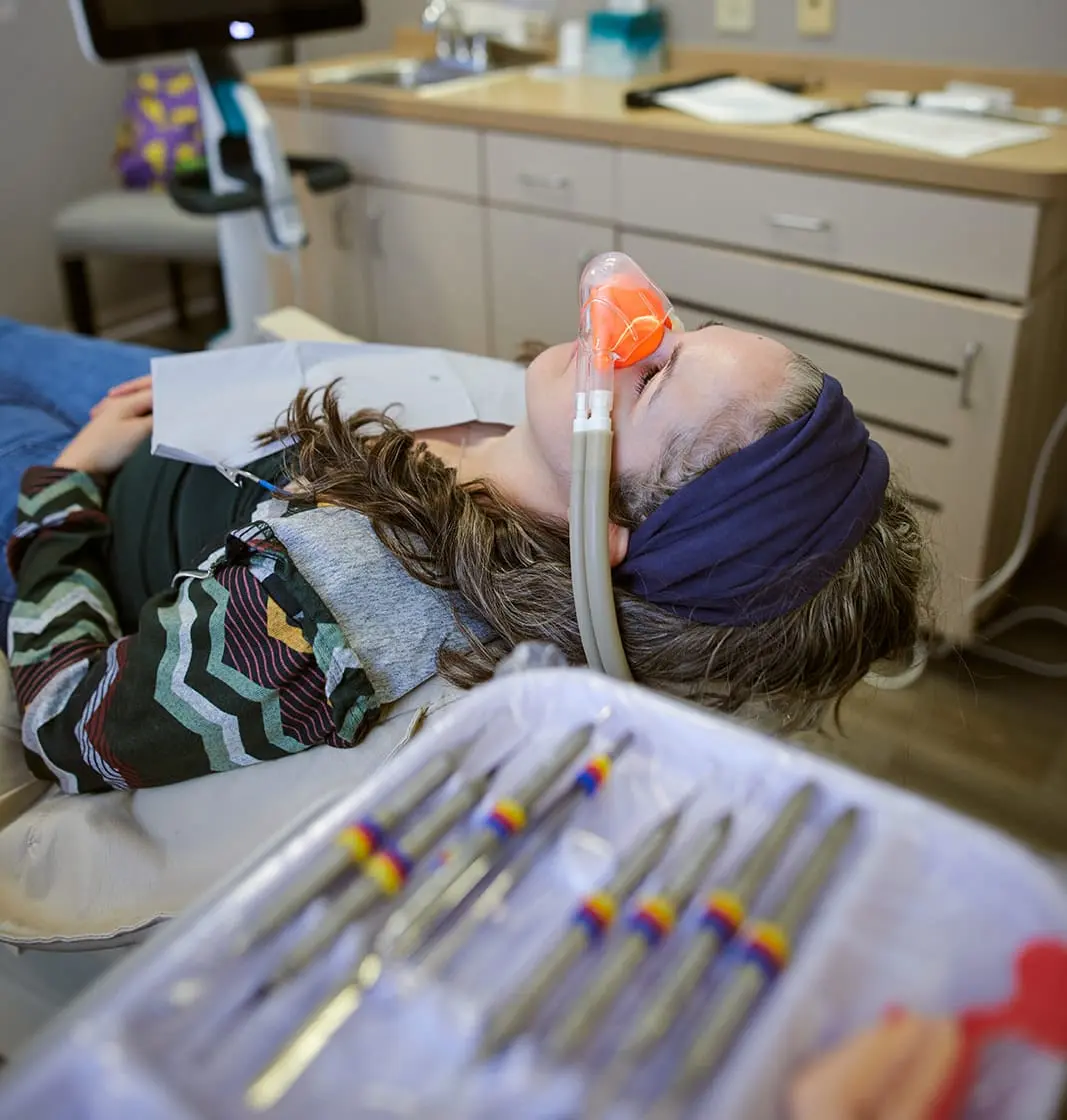
A small nasal mask delivers a measured blend of nitrous oxide and oxygen while you breathe normally. The level can be adjusted throughout the visit and usually wears off quickly after treatment.
- Useful for mild anxiety and many routine procedures
- You remain awake and communicative
- Return to normal activities depends on individual response and clinical guidance
Selected complex cases
General Anesthesia
General anesthesia produces unconsciousness and requires advanced airway, medication, and physiologic monitoring. It is reserved for appropriate patients and procedures after a thorough medical assessment.
- Separate pre-anesthesia instructions apply
- Fasting and transportation requirements are strict
- Recovery supervision is essential
Who may benefit?
Comfort support for more than dental anxiety alone.
Sedation may help patients who have delayed care because of fear or who find treatment difficult for physical, sensory, or procedural reasons.
It may be considered for
- Mild, moderate, or severe dental anxiety
- A strong gag reflex or sensitivity to sights, sounds, or sensations
- Difficulty becoming numb with local anesthetic
- Long or complex treatment plans
- Difficulty remaining still or keeping the mouth open
- Previous distressing dental experiences
Personalized screening
The right option begins with the right questions.
Health history
Review heart, lung, liver, kidney, neurologic, pregnancy, sleep apnea, and previous anesthesia concerns.
Medication review
Discuss prescriptions, nonprescription products, supplements, allergies, alcohol, cannabis, nicotine, and other substances.
Anxiety & treatment
Consider triggers, desired level of awareness, procedure complexity, duration, and previous dental experiences.
Recovery logistics
Confirm fasting instructions, transportation, adult supervision, time away from work, and post-treatment responsibilities.
Before, during & after
Safety depends on following the complete plan.
Your instructions vary by sedation level. Do not assume guidance from a previous procedure applies to the next appointment.
Before
Follow food, drink, and medication instructions exactly. Wear comfortable clothing and arrange an escort whenever directed.
During
The team monitors appropriate vital signs, responsiveness, breathing, and comfort according to the selected sedation level.
After
Rest under responsible adult supervision when instructed. Do not drive, work, exercise, drink alcohol, or make important decisions until cleared.

After local anesthesia
OraVerse may help normal sensation return sooner.
Local anesthetic numbness can linger after treatment. For eligible procedures and patients, OraVerse may be used to shorten soft-tissue numbness after certain local anesthetics.
OraVerse is not a sedative and does not replace local anesthesia. The dentist determines whether it is appropriate based on the anesthetic used, treatment, health history, and expected benefit.
Learn more about OraVersePotential benefits
Make necessary care feel more achievable.
Reduced anxiety
Relaxation can help interrupt the cycle of fear, avoidance, and increasingly complex dental needs.
Less awareness
Some sedation levels reduce awareness of time and may result in limited memory of treatment.
Gag reflex support
Sedation may reduce a strong gag response that makes examinations or treatment difficult.
Longer visits feel manageable
Appropriate sedation can support comfort during extended or multi-step procedures.
Easier stillness
Relaxation may make it easier to remain still and keep the mouth open during care.
Efficient coordinated care
Selected patients may complete more treatment in one visit when it is clinically appropriate and safe.
At-a-glance comparison
Understand how each option changes the experience.
| Option | Typical awareness | How it is given | Escort | Recovery |
|---|---|---|---|---|
| Nitrous oxide | Awake and responsive | Nasal mask | May not be required; follow instructions | Usually shortest |
| Oral conscious | Awake, drowsy, limited memory possible | Prescription medication | Required | Rest of the day commonly needed |
| IV sedation | Deeply relaxed; responsiveness varies | Intravenous medication | Required | Extended supervision required |
| General anesthesia | Unconscious | Anesthesia medications | Required | Individualized monitored recovery |
Sedation dentistry FAQ
Clear answers can ease the first layer of anxiety.
Will sedation put me to sleep?
Nitrous oxide, oral conscious sedation, and many IV sedation protocols are not the same as general anesthesia. You may feel very drowsy and remember little, but the intended level of awareness depends on the selected method.
Does sedation replace local anesthesia?
No. Sedation primarily reduces anxiety and awareness. Local anesthetic is commonly used separately to numb the area being treated.
Will I need someone to drive me?
An escort is required for oral conscious sedation, IV sedation, and general anesthesia. Transportation requirements for nitrous oxide depend on individual response and the dentist’s instructions.
Can I eat before sedation?
Fasting instructions depend on the type of sedation, procedure, health history, and appointment time. Follow only the instructions provided for your specific visit.
Will I remember the procedure?
Memory varies. Oral and IV sedation may cause partial or significant amnesia, while nitrous oxide generally leaves patients more aware. No specific memory response can be guaranteed.
Is sedation dentistry safe?
Sedation has risks and is not appropriate for everyone. Careful screening, correct dosing, monitoring, emergency preparedness, and adherence to instructions are essential.
How long will the effects last?
Nitrous oxide usually clears most quickly. Oral, IV, and general anesthesia effects may continue for hours, so driving, work, alcohol, exercise, and important decisions may be restricted.

Care can feel different
Start with a conversation about what helps you feel safe.
Meet with our Frisco team to discuss your concerns and determine whether a sedation option fits your health and treatment plan.