
Full-arch dental implants · Frisco, Texas
All-on-4 dental implantprocedureA complete smile, thoughtfully supported.
Four strategically planned implants can support a complete arch of replacement teeth—creating a stable, streamlined option for selected patients with extensive tooth loss.
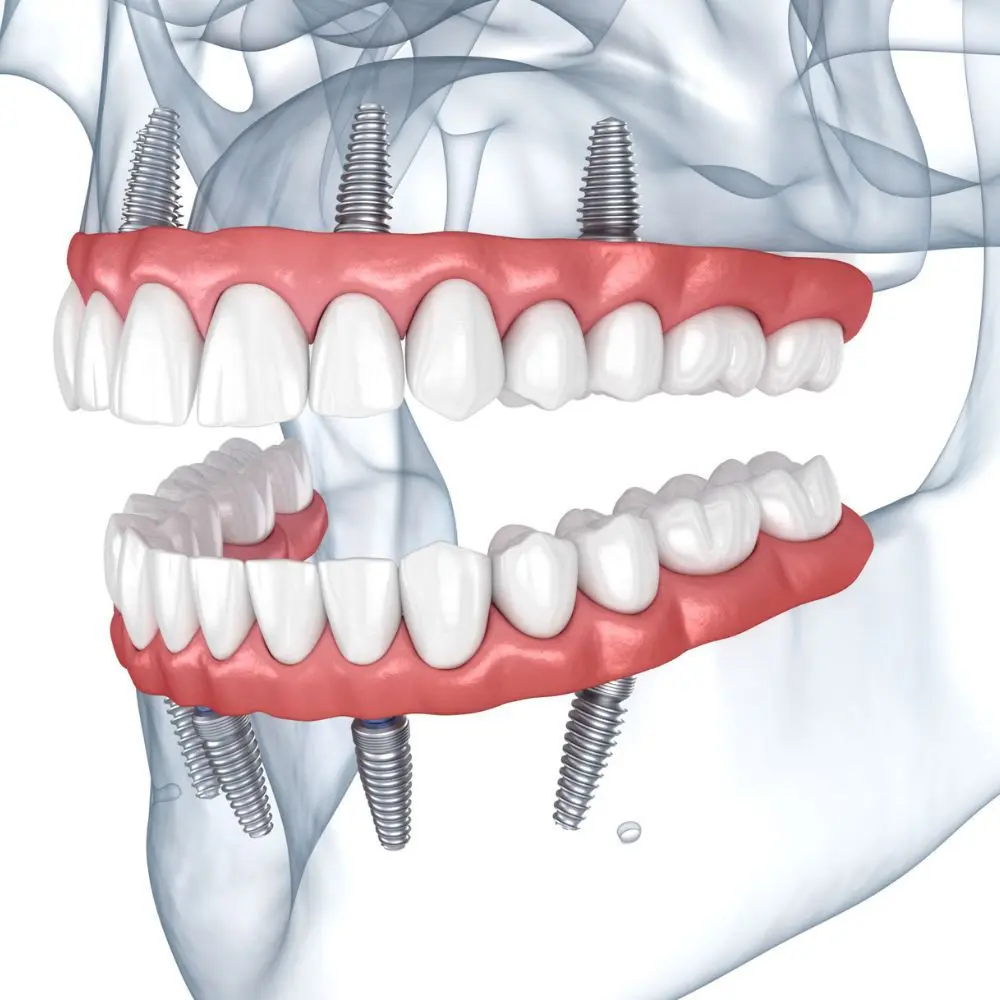
Minimally invasive dental implants in Frisco
A full arch supported by four precisely placed implants.
All-on-4 uses available bone strategically to create a strong foundation for a complete restoration.
Two implants are generally positioned toward the front of the jaw, while two posterior implants are angled to engage naturally stronger areas of bone. This distribution can provide broad support with fewer implants than some conventional full-arch designs.
For selected patients, the approach may reduce or eliminate the need for bone grafting. A clinical examination and three-dimensional imaging are essential before that determination can be made.
Why Stonebriar Smile Design
One team connects the surgical plan to the final smile.
Implants placed in-house
Planning, implant placement, and restorative care can be coordinated in our Frisco office when clinically appropriate.
Lifelike materials
Every full-arch restoration is designed around facial proportion, function, bite balance, and a natural-looking smile.
Full-mouth experience
Our dentists bring advanced training and a whole-person perspective to complex restorative treatment.

How All-on-4 works
Designed to make efficient use of your existing anatomy.
Anterior support
Two implants are commonly positioned more vertically in the front portion of the jaw.
Angled posterior support
Two back implants are placed at planned angles to engage available bone and extend support across the arch.
One complete restoration
A custom prosthesis connects to the implants to replace a full upper or lower arch of teeth.
Is All-on-4 right for you?
Candidacy begins with a complete health picture.
All-on-4 may be considered for people who have lost, or are expected to lose, most or all teeth in one arch. The right solution depends on health, anatomy, goals, and the condition of any remaining teeth.
Oral health
Active infection and gum disease must be identified and treated as part of the plan.
Bone & anatomy
3D imaging helps locate available bone and important structures before implant positions are selected.
General health
Medical history, medications, healing capacity, and surgical risk are reviewed carefully.
Long-term habits
Home care, recall visits, tobacco use, and bite forces all influence maintenance and longevity.
The treatment experience
A coordinated path from evaluation to your definitive restoration.
Consultation & 3D planning
We evaluate your teeth, gums, bite, jawbone, health history, and goals, then discuss appropriate options and alternatives.
Preparatory care
Teeth that cannot be retained may be removed. Grafting or other preparation is recommended only when the individual plan requires it.
Implant placement
Four implants are positioned according to the digital plan using anesthesia and comfort measures selected for your needs.
Provisional teeth
A temporary full-arch restoration may be connected early when implant stability and clinical conditions permit.
Healing & integration
The implants stabilize with the jawbone while the team monitors tissues, function, hygiene, and the temporary restoration.
Final smile
After healing, the definitive restoration is refined for appearance, fit, speech, comfort, and bite balance.
Potential benefits
Stability designed for daily living.
Full-arch stability
The restoration is supported by implants rather than resting only on the gums.
Streamlined support
Four carefully distributed implants can support an entire arch in suitable cases.
Potentially less grafting
Angled posterior placement may make use of stronger bone and reduce grafting needs for some patients.
Earlier provisional smile
Selected patients may receive temporary teeth near the time of surgery, subject to implant stability.
Bone stimulation
Integrated implants transfer functional forces to the jaw and may help preserve supporting bone.
Long-term potential
With healthy tissues and consistent maintenance, implant restorations can serve for many years; longevity varies.
All-on-4 vs. conventional approaches
The best design is the one that fits your clinical needs.
Traditional full-arch implant treatment may use more implants or require grafting where bone is limited. All-on-4 uses four planned posts and posterior angulation to create support from available bone.
Neither approach is universally better. Implant number, prosthesis design, maintenance access, bite forces, and anatomy must be evaluated together.
Explore dental implant options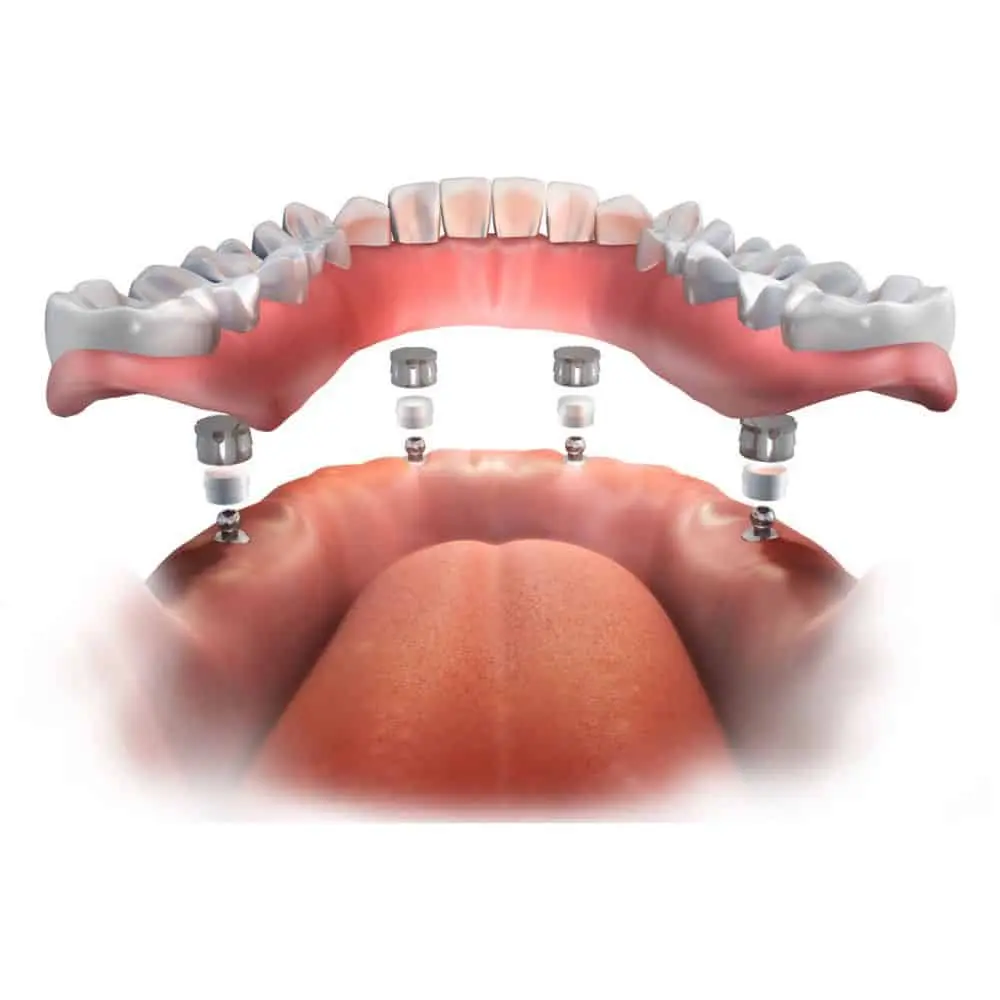
Recovery & long-term care
Protect the foundation with consistent care.
Follow recovery guidance
Use medications as directed, protect surgical sites, and follow the recommended temporary diet while healing.
Clean beneath the arch
Brush and use floss threaders, interdental brushes, or a water flosser as demonstrated by the team.
Respect the bite
Avoid using the restoration as a tool and wear a protective appliance when one is prescribed.
Maintain professional visits
Regular care allows the team to monitor tissues, bone, bite, prosthetic components, and home hygiene.

Planning the investment
Your estimate reflects your complete treatment plan.
Fees vary with imaging, extractions, anesthesia or sedation, implant components, temporary teeth, final restorative materials, laboratory design, and any necessary preparatory treatment.
After evaluation, our team can explain the recommended phases and available payment or third-party financing options.
All-on-4 FAQ
Clear answers for a life-changing decision.
Does All-on-4 always avoid bone grafting?
No. Strategic implant angulation may reduce grafting needs for some patients, but anatomy and bone quality determine whether additional treatment is necessary.
Can I receive teeth on the day implants are placed?
A provisional restoration may be possible when implants achieve appropriate stability and other clinical requirements are met. It is not guaranteed for every case.
Are All-on-4 teeth removable?
The prosthesis is commonly fixed to the implants and removed by a dental professional when needed. Your dentist will explain the exact design and cleaning method.
How long does healing take?
Implant integration generally takes several months. Individual timelines vary with health, anatomy, surgical needs, and healing response.
How long can an All-on-4 restoration last?
Implants and restorations can provide long service with healthy tissues and maintenance, but components may wear or require repair over time. No lifespan can be guaranteed.
How do I clean a full-arch implant restoration?
Daily cleaning must reach beneath the prosthesis and around every implant. The team will recommend tools and demonstrate a technique suited to your restoration.

Begin with clarity
Discover whether All-on-4 fits your next chapter.
Meet with our Frisco team for a comprehensive evaluation, 3D imaging, and a personalized full-arch treatment plan.