
Oral appliances · Frisco, Texas
Support the airway.Simplify the night.Sleep with confidence.
A custom-fitted dental appliance can offer comfortable, portable support for selected adults with primary snoring or diagnosed obstructive sleep apnea.
Sleep apnea relief in Frisco
A small device can create meaningful airway support.
Custom care—not an over-the-counter mouthguard.
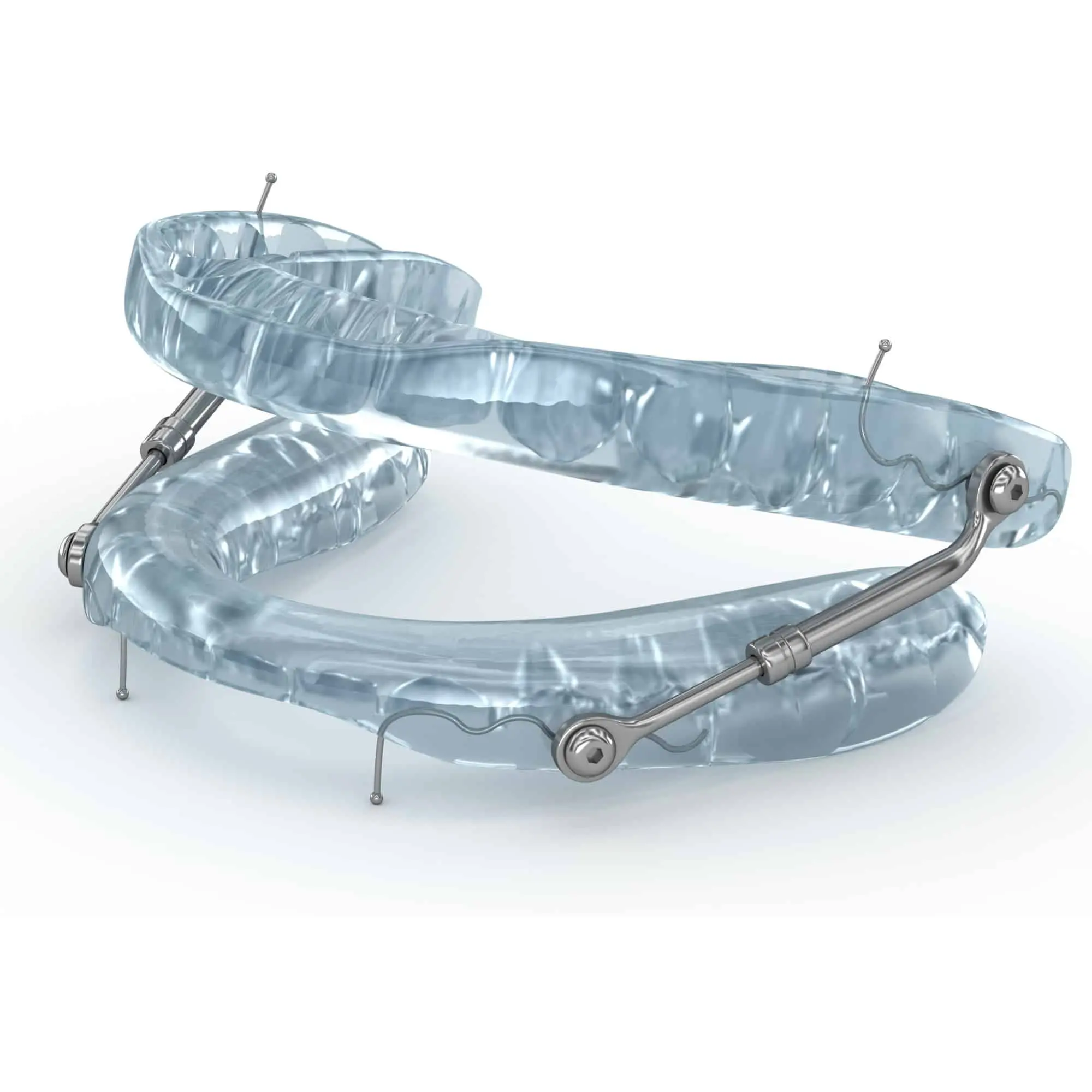
A mandibular advancement device is worn over the teeth while you sleep. It gently supports the lower jaw in a forward position, which can help maintain space behind the tongue and reduce upper-airway collapse or vibration.
The appliance must be selected and adjusted for your anatomy, teeth, gums, jaw joints, diagnosis, and treatment goals. A medical sleep study establishes whether obstructive sleep apnea is present; the dentist then works within that diagnosis to provide and monitor dental therapy.
Why Stonebriar
Precision where comfort and effectiveness meet.
Comfortable, personalized appliances
Your device is made for your mouth and advanced gradually, helping balance airway goals with tooth and jaw comfort.
Detailed 3D records
Digital impressions and, when clinically indicated, CBCT imaging help the team evaluate anatomy and plan with greater detail.
Physician-coordinated care
The dentist collaborates with the diagnosing sleep provider and uses follow-up testing to help verify treatment response.
Who may benefit?
An option for selected patients—not a universal replacement.
Oral appliance therapy may be recommended for primary snoring or obstructive sleep apnea after the diagnosis, severity, anatomy, preferences, and other treatments have been considered.
Often considered when
- A sleep physician diagnoses mild or moderate OSA
- PAP therapy is not tolerated or another option is requested
- A patient has primary snoring without OSA
- Travel or lifestyle makes a compact therapy valuable
- Combination therapy may support physician-directed care
Needs closer evaluation when
- OSA is severe or oxygen levels are significantly affected
- There are too few stable teeth for retention
- Active gum disease or decay needs treatment
- Jaw pain, limited opening, or bite instability is present
- Another airway site or medical condition may dominate
A complete evaluation
Plan around the airway without overlooking the teeth and joints.
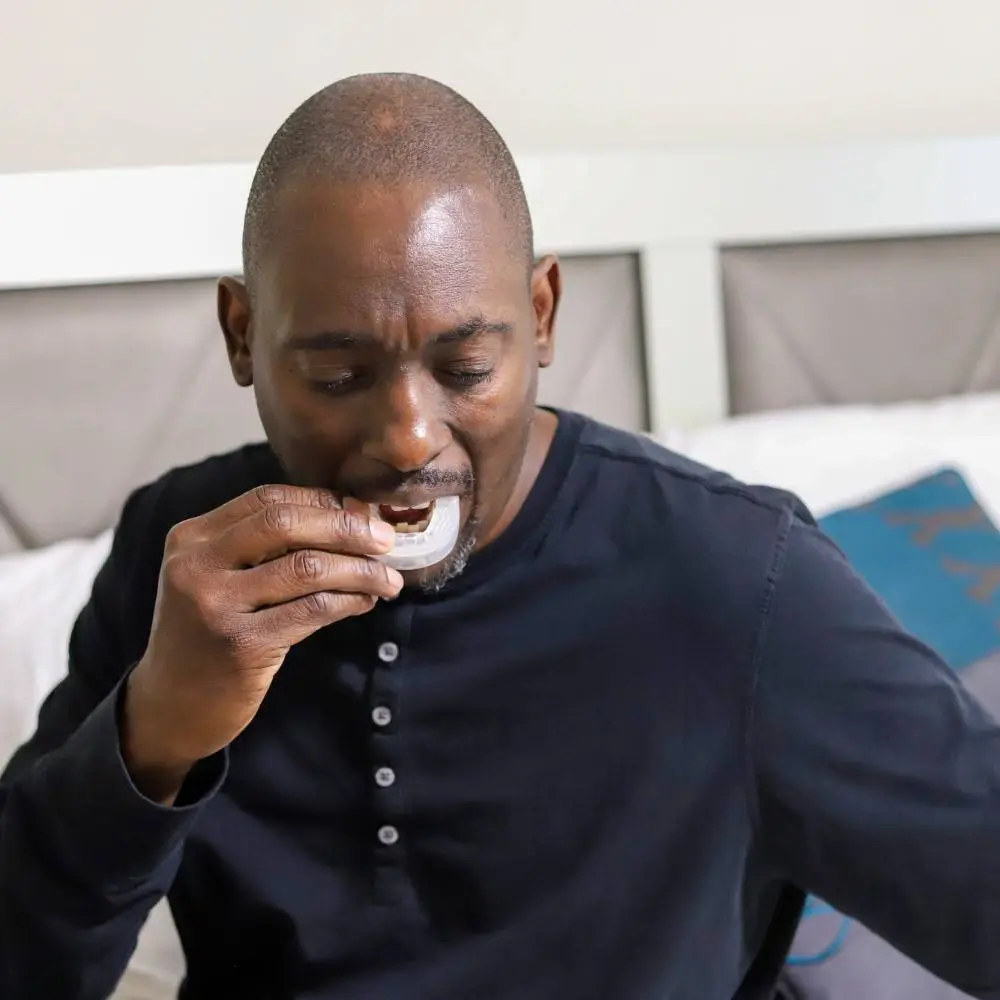
Before an appliance is prescribed, the team reviews the sleep diagnosis and examines the structures that will support the device.
- Sleep historyReview the sleep study, severity, oxygen findings, symptoms, PAP experience, and physician recommendations.
- Dental healthEvaluate teeth, restorations, gums, bone support, available retention, and oral hygiene.
- Bite & jaw functionAssess movement, muscles, temporomandibular joints, existing discomfort, and baseline tooth relationships.
- Digital planningCapture detailed impressions and use photographs, bite records, or appropriate 3D imaging when clinically useful.
Your treatment journey
Custom from the first scan through every careful adjustment.
Design
Select an appropriate appliance and create it from precise records of your teeth and bite.
Deliver
Confirm fit and retention, then review placement, removal, cleaning, storage, and morning care.
Advance
Move the lower-jaw setting gradually according to comfort, symptoms, and clinical guidance.
Verify
Complete physician-directed follow-up testing to measure whether breathing events have improved adequately.
Maintain
Return periodically so the device, bite, teeth, gums, jaw comfort, and sleep response can be monitored.
Potential benefits
Airway therapy that fits inside everyday life.
Quiet and compact
The device operates without a motor, tubing, electricity, or bedside equipment.
Travel-friendly
A protective case makes the appliance relatively simple to carry and use away from home.
Non-surgical
Treatment does not require an operation and can be adjusted incrementally.
Personalized fit
Custom fabrication provides greater precision than boil-and-bite or retail snoring products.
Potential symptom improvement
Effective therapy may reduce snoring and support more restorative sleep, energy, and concentration.
Flexible coordination
For selected patients, a physician may recommend an appliance alone or alongside PAP therapy.
What to expect
Comfort improves through measured follow-up.
New oral appliances can temporarily increase saliva or dryness and may cause tooth, muscle, or jaw tenderness. Gradual advancement and timely adjustments help the team respond before a small concern becomes a reason to stop treatment.
Contact the office if you notice
- Persistent tooth or jaw pain
- A device that feels loose, cracked, or damaged
- New difficulty placing or removing it
- A bite change that does not settle with prescribed morning care
- Recurring snoring, sleepiness, or breathing concerns
Do not bend, trim, heat, or advance the appliance beyond the instructions provided.
Daily care
Protect your appliance and the smile beneath it.
Clean your teeth first
Brush and floss before bedtime so food and plaque are not trapped beneath the device overnight.
Clean the appliance
Use a soft brush, cool or lukewarm water, and the cleaning product recommended for its material. Avoid abrasive toothpaste unless instructed.
Dry and store
Allow the appliance to air-dry and keep it in a ventilated protective case away from heat, children, and pets.
Bring it to reviews
The team checks cleanliness, fit, wear, retention, settings, oral health, and possible bite changes.
Oral appliance & PAP
The best therapy is one that is effective, safe, and used consistently.
| Consideration | Oral appliance | PAP therapy |
|---|---|---|
| How it works | Supports the jaw to help maintain airway space | Uses pressurized air to help keep the airway open |
| Common role | Selected primary snoring or OSA cases | Highly effective across OSA severity levels |
| Equipment | Small custom dental device | Machine, mask, and tubing |
| Monitoring | Dental follow-up plus medical sleep testing | Sleep-clinician follow-up and device data |
| Important note | Do not stop or change prescribed therapy without the clinician managing your sleep apnea. | |
Oral appliance FAQ
Practical answers for every night ahead.
Do I need a sleep study before receiving an appliance?
Medical diagnosis and sleep-study information are important when obstructive sleep apnea is suspected. An appliance for primary snoring should also follow screening to reduce the risk of overlooking OSA.
Can an oral appliance replace my CPAP?
Possibly for selected patients, but only after discussion with the sleep clinician. Do not discontinue or reduce PAP settings on your own.
How do I know whether the appliance works?
Improved symptoms are useful, but follow-up sleep testing is generally needed to verify changes in breathing events and oxygen levels.
Will it change my bite?
Gradual tooth movement or bite changes are known risks. Baseline records, appropriate design, prescribed morning care, and ongoing monitoring help manage them.
How long does an appliance last?
Service life depends on the material, grinding, care, oral changes, and use. Regular reviews help identify wear before performance or safety is affected.
Can I use a store-bought snoring guard?
Retail products are not planned from your diagnosis, teeth, joints, or bite and may fit poorly. Diagnosed OSA should be treated with a professionally selected and monitored device.

Personalized nighttime support
Discover whether an oral appliance fits your sleep plan.
Bring your sleep-study information to Stonebriar Smile Design in Frisco and explore a comfortable, physician-coordinated treatment option.